Waterfall Edges: The Contemporary Kitchen Trend Worth the Investment
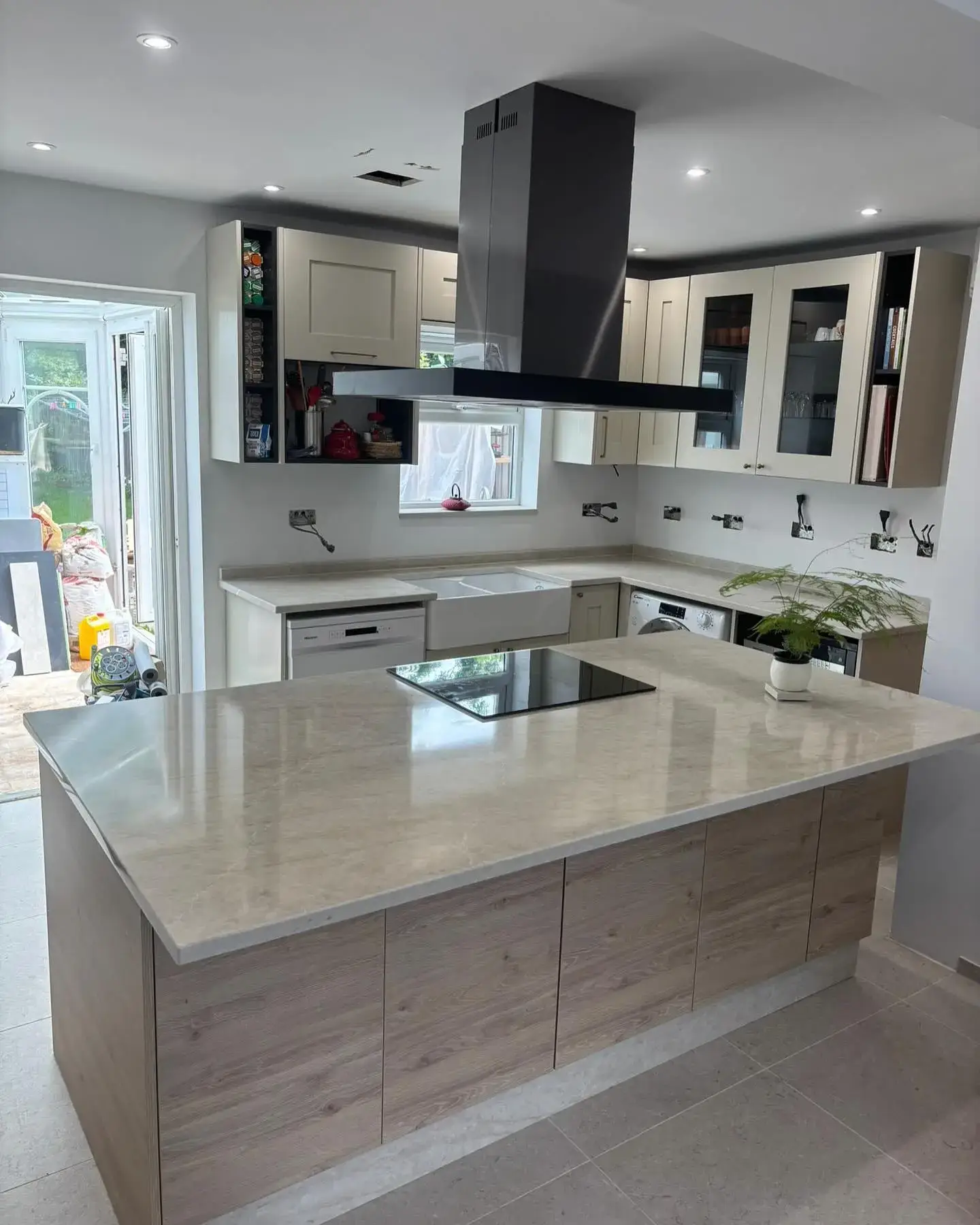
Few design details have grown in popularity as quickly as the waterfall edge, where a worktop appears to flow continuously over the side of an island down to the floor, with no visible joint or transition. It has become one of the defining looks of the contemporary British kitchen.
Why It Works So Well
The appeal is simple. A waterfall edge turns a worktop into a single, sculptural object rather than a flat surface sitting on top of cabinetry. Book-matched veining, where the pattern on the side panel mirrors the pattern on top, creates a particularly striking effect that photographs beautifully and looks even better in person.
What Is Actually Involved
Achieving a seamless waterfall edge requires precise mitred joints, cut so accurately that the seam becomes almost invisible once fitted. This takes considerably more skill and workshop time than a standard square edge, which is reflected in the additional cost, but the visual payoff is significant for the right kitchen.
Which Materials Suit It Best
Both granite and quartz can be finished with a waterfall edge, though quartz’s more consistent veining pattern makes book-matching slightly more predictable. Granite offers a more dramatic, one-of-a-kind result for homeowners who want a completely unique piece.
Is It Right for Every Kitchen?
Waterfall edges suit larger islands with clean, uninterrupted sides most naturally. In smaller kitchens, a simpler edge profile may be more practical, both in terms of cost and proportion. We are always honest with clients about whether a waterfall edge will genuinely suit their layout, rather than recommending it purely because it is popular.
See examples of completed waterfall edge islands in our portfolio, or browse current stone options on our kitchen worktops page.
Contact Us
Ready to talk through your project? Get in touch with the Passion for Granite team today.